
How to Choose a Quality Supplement: FWT Edition

Walk into a health food store or search for a supplement online and you can quickly end up staring at twenty versions of the same nutrient. One says chelated. Another says methylated. Another says food-based. One has a dozen certifications on the bottle, another has a long list of ingredients you can barely pronounce, and somehow the most expensive one is supposed to be the best.
So how do you actually choose?
I don’t think there is one universal definition of a “quality supplement.” The right product depends on what you’re trying to accomplish, which nutrient you’re taking, the form and dose, and the person taking it. A good supplement is one that makes sense for the particular job it needs to do.
And before we even get to the bottle, there’s an important question: Do you need the supplement in the first place?
I believe food should be the foundation of nutrition. Supplements can be useful tools when there is a specific reason to use them, but I don’t view them as nutritional insurance policies that everyone needs to carry.
Once you’ve determined that supplementation actually has a purpose, here’s what I look at.
Start with the nutrient and the dose
The front of a supplement bottle is usually the least interesting part.
Turn it around and look at the Supplement Facts panel. What nutrient are you actually getting? In what amount? In what form? How many capsules or scoops make up that serving?
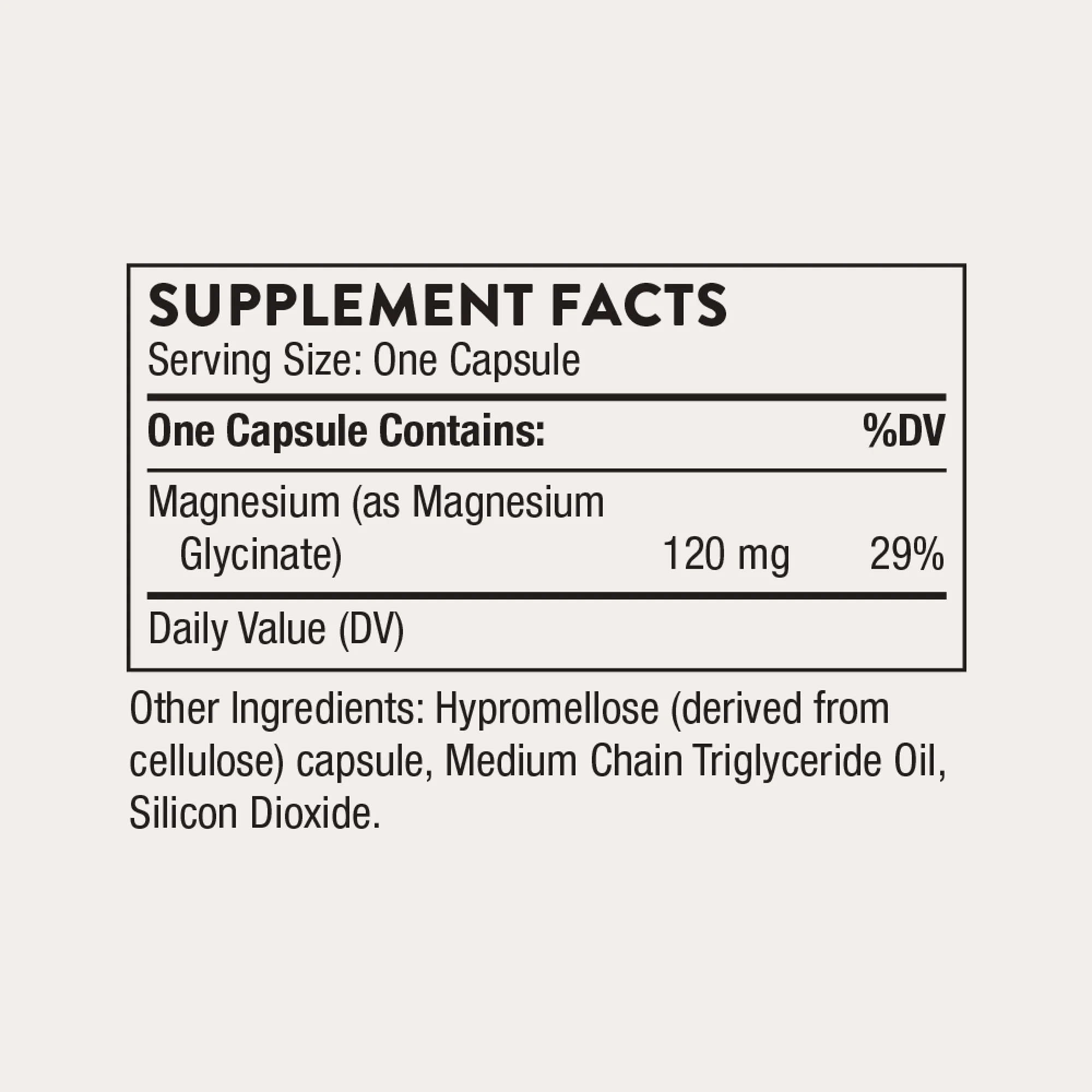
Two products that both say “magnesium” on the front can contain very different forms of magnesium, and the amount listed on the label doesn’t necessarily tell you everything about how that form behaves in the body.
This is one reason I don’t like blanket rules about supplements. You can’t really say that one form of a nutrient is always better than another without asking, “better for what?“
Form matters
The chemical form of a nutrient can affect things such as solubility, absorption, bioavailability, metabolism, and gastrointestinal tolerance.
Minerals are a good example. Different mineral salts and chelated forms can behave differently in the digestive tract, and research has found differences in bioavailability among particular forms. That doesn’t mean every chelated mineral is automatically superior, but it does mean the form on the label can be worth paying attention to when you’re choosing a product.
The same principle applies to vitamins.
Vitamin E is a particularly interesting example because what we casually call “vitamin E” actually encompasses different stereoisomers. Naturally occurring RRR-alpha-tocopherol and synthetic all-rac-alpha-tocopherol are not chemically identical, and research has demonstrated differences in their absorption, distribution, metabolism, and biological activity. At the same time, the exact relationship between bioavailability and clinical potency is more complicated than simply declaring one form “good” and the other “bad.”
That’s the kind of distinction I want to preserve when evaluating supplements. The chemistry matters, but context matters too.
“Natural” and “synthetic” aren’t always simple categories
Supplement marketing loves the word natural. I understand why. Most people would rather picture a nutrient coming from a plant than imagine it being manufactured in a laboratory.
But “natural” doesn’t automatically mean better, and “synthetic” doesn’t automatically mean inferior.
Sometimes the chemical form really does matter. Sometimes a synthetic version is chemically identical to the form found in food, and having it be synthetic means we can consistently dose it. Sometimes different forms have meaningful differences in bioavailability or biological activity. Sometimes the evidence simply doesn’t show that one version produces better clinical outcomes. And, sometimes, it really just comes down to marketing.
“Whole food vitamins” are a great example of a marketing industry dirty-little-secret. Typically whole food vitamins are a combination of ground up fruits, vegetables, and herbs that are augmented with synthetic nutrients. But in order to market the synthetic nutrients as sourced from whole foods, they are first fed to yeasts that are then dried and added to the mixed food powder. (A giveaway is “from culture of S. cerevisiae“, which is a type of yeast)
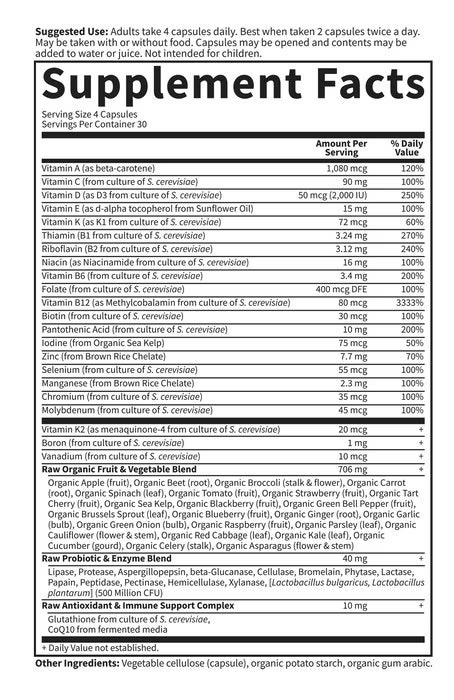
To be clear: these are NOT “bad” products, but just may not be what you were expecting. And this is also a perfect example of why I don’t think supplement advice should be reduced to a list of “good forms” and “bad forms.”
What about fillers and other ingredients?
This is another place where supplement conversations can get unnecessarily dramatic.
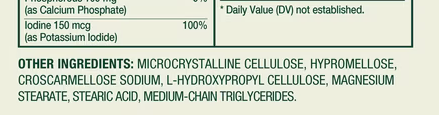
Look at the Other Ingredients section of the label. You’ll find things such as binders, capsule materials, stabilizers, preservatives, flavors, colors, and other excipients.
Some people want the shortest possible ingredient list, and there are circumstances where that makes sense. If you have a known allergy or sensitivity or react to almost everything, for example, an ingredient that is present in a tiny amount can still matter to you.
While an ingredient being difficult to pronounce doesn’t automatically make it harmful, we want to know, why is it there, how much is present, and does it matter for this particular person? Some ingredients are necessary for manufacturing and to keep costs down or hold tablets together, while others are simply there to change the color.
U.S. supplement labels are required to list ingredients outside the Supplement Facts panel in an “Other Ingredients” section, so this is information you can actually use when comparing products.
Look for meaningful quality testing
There’s another part of supplement quality that has nothing to do with whether the ingredient sounds fancy: Does the manufacturer have systems in place to verify what’s actually in the finished product?
Dietary supplements are regulated differently from drugs, and the FDA does not routinely analyze the contents of supplements before they reach consumers. Independent quality programs can therefore provide useful additional information.
Organizations including USP, NSF, and ConsumerLab offer different forms of independent testing or verification. Their programs aren’t identical, and a certification or seal doesn’t guarantee that a supplement is safe or effective. What it can do is provide additional information about things such as whether a product contains what its label says it contains and, depending on the program, whether it meets particular quality standards.
I consider that valuable information, particularly when I’m choosing products where purity, potency, or contamination are meaningful concerns.
Don’t confuse a quality supplement with a high-dose supplement
This is one of the biggest mistakes I see in supplement shopping.
People sometimes assume that if a little is good, more must be better. Or they look for a product that provides several hundred percent of the Daily Value because it feels more substantial.
But the Daily Value, RDA, or other reference intake isn’t a simple measure of how much a particular person should supplement. Nutrient requirements vary based on diet, unique individual needs (like genetics, stage of life, stress, symptoms), lab-determined needs, and therapeutic target, and so the amount appropriate for supplementation depends on the individual and the purpose.
A quality supplement isn’t necessarily the one with the biggest number on the label.
Sometimes a relatively modest dose is exactly what someone needs. Sometimes a therapeutic situation calls for considerably more. And sometimes supplementation isn’t warranted at all.
The dose needs to have a reason behind it.
Pay attention to the whole formulation
I also don’t want to choose supplements one ingredient at a time without considering the rest of the person’s plan.
Nutrients interact. Some compete for absorption. Some affect the metabolism or utilization of others. Some medications can alter nutrient status, and some supplements can interact with medications.
If you’re taking five different products, the question isn’t just whether each individual ingredient looks reasonable. It’s also whether the combination makes sense.
This is one reason I don’t love supplement protocols built around a giant checklist of nutrients. The more products you add, the more important it becomes to understand why each one is there.
My supplement checklist
When I’m evaluating a supplement, these are the questions I’d want answered:
Why am I taking it?
There should be a reason beyond “I heard it’s good for you” and “My friend suggested I take it because it’s really helping her.”
What nutrient am I actually getting?
Look at the Supplement Facts panel rather than relying on the front of the bottle.
What form is it in?
For some nutrients, form can meaningfully affect bioavailability, metabolism, tolerability, or biological activity.
What is the dose?
More isn’t automatically better.
What’s in the rest of the formulation?
Look at the Other Ingredients, especially if you have allergies, sensitivities, or other reasons to avoid particular ingredients.
How is the product tested?
Independent verification can provide useful information about quality and what is actually in the finished product.
Does it make sense alongside everything else I’m taking?
A supplement doesn’t exist in isolation.
And finally:
Do I actually need it?
That’s the question I would put first, even though it’s the one supplement companies have the least incentive to emphasize.
A quality supplement isn’t necessarily the most expensive bottle on the shelf, the one with the longest ingredient list, or the one making the most impressive claims. It’s a product with an appropriate ingredient, form, dose, and quality standard for a reason that makes sense for the person taking it.
That’s how I think about supplementation now. Food first, targeted supplementation when it has a purpose, and enough attention to the science to know the difference.
If you’re not sure where to purchase quality supplements from, feel free to set up an account on my Fullscript site featuring 10% off retail and browse. Fullscript is an online dispensary of high-quality, vetted products that are stored in proper conditions.