Complex Problems Usually Need More Than a Simple Answer.
My Approach
Some health questions are pretty straightforward. Others are not.
Maybe you’ve already changed your diet, tried a handful of supplements, seen several practitioners, or spent hours researching your symptoms yourself. Maybe you’ve been told your labs are “normal,” but you still don’t feel like yourself. Or maybe you’ve been handed such a long list of things to do that you don’t even know where to begin.
Those are the kinds of situations I tend to enjoy working on. I like complicated puzzles, especially when the pieces don’t seem to fit together at first. My job is not to walk in with a predetermined answer, but to listen carefully, look for patterns, and work with you to figure out what might actually be useful.
I Listen Before I Start Solving
Good work starts with listening. I want to understand what you’ve experienced, what happened before things changed, what you’ve already tried, what helped, what didn’t, and what you think might be important.
That includes the things that don’t necessarily fit neatly into a symptom checklist. Your history, your environment, your food, your routines, your stressors, your previous experiences with healthcare, and your own observations can all give us useful information.
And sometimes people need something very simple at the beginning: to have someone actually listen to them and take their experience seriously.
I don’t want you to feel like a problem I’m trying to solve. We’re solving the problem together.
I Get Into the Arena With You
I intentionally keep my caseload small because I want to be involved in the process, not simply hand you a plan and send you off to implement it.
Health changes rarely happen exactly the way we expect. Something may work beautifully for one person and not for another. A plan that looked manageable on paper may turn out to be completely unrealistic once it meets your actual life. Sometimes we discover that the thing we thought was most important isn’t where we need to start after all.
That’s information, not failure.
My role is to pay attention, help you make sense of what’s happening, and adjust the plan as we learn more. We’re a team here.
You Probably Don’t Need 17 New Things to Do
You’ve probably seen this scenario before. You’re already exhausted, you’re sleeping terribly, you’re overwhelmed, and then someone gives you a list of 17 supplements, two referrals, a bunch of lab work, and a new exercise routine you’re supposed to start immediately.
Technically, every item might have a rationale behind it. Practically, you’re now even more overwhelmed than when you walked in.
I think there is a better way.
I want to identify the things that are most likely to matter, figure out what is realistic right now, and take it one step at a time. Sometimes we will eventually get to many of those other pieces. They just don’t all have to happen on Tuesday.
I Look for Connections
Systems thinking can sound like complicated practitioner language, but the basic idea is pretty simple: I don’t assume that every symptom is its own separate problem.
If digestion has changed, I want to know what else changed around the same time. If someone’s energy is poor, I don’t automatically assume the answer is simply “more protein” or “take this supplement.” I want to understand the broader picture and consider how nutrition, digestion, sleep, stress, metabolism, hormones, the nervous system, the gut, and the environment may be interacting.
That doesn’t mean everything is connected to everything else. It means I’m willing to look for connections instead of stopping at the first plausible explanation.
And when the obvious approach hasn’t worked, I’m willing to look at the problem from a different angle.
Sometimes the Answer Is Outside the Box
One of the reasons my background is so useful is that I didn’t learn everything I know from one discipline.
My clinical social work background taught me how to listen, understand context, recognize patterns, and appreciate how much a person’s circumstances can influence their ability to make changes.
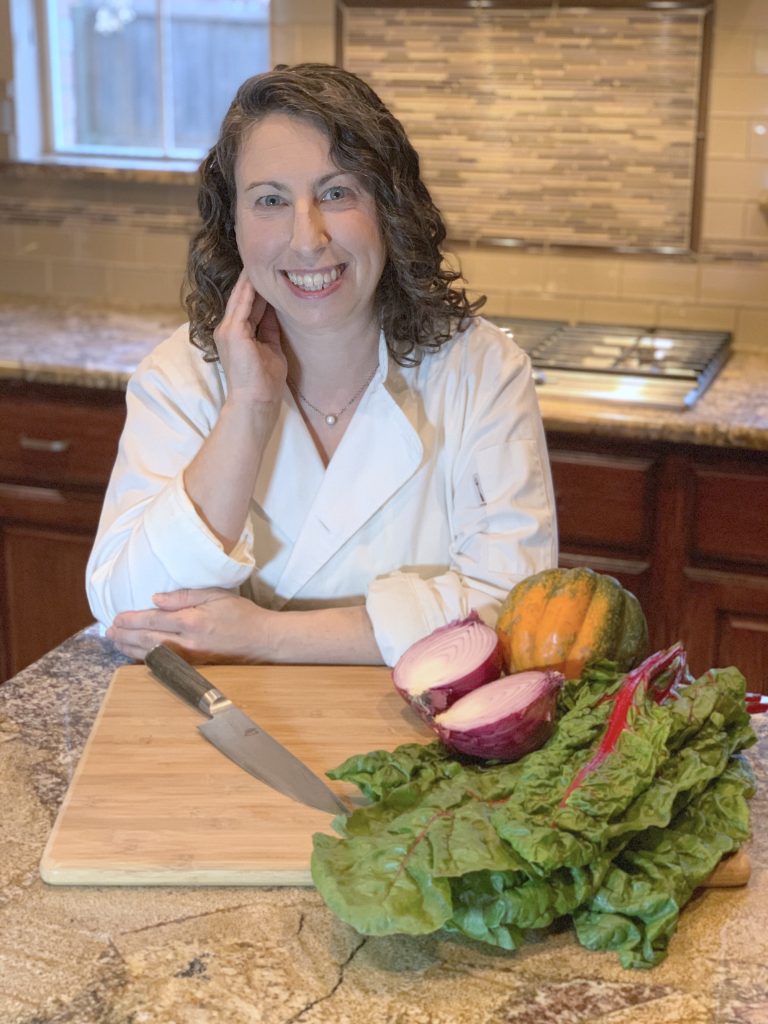
My nutrition training gave me a deeper understanding of food, nutrients, physiology, and metabolism. My microbiome training added another layer of complexity, and my culinary and pastry background taught me something that doesn’t always get enough attention in nutrition practice: people actually have to eat the food.
That sounds obvious, but it changes how I approach recommendations.
If I want someone to eat more nutrient-dense foods, for example, I’m not particularly interested in handing them a list of 20 foods and calling it a day. I want to think through how we could actually incorporate those foods into meals they enjoy, with the time, skills, preferences, family, and budget they actually have.
Sometimes the creative solution is nutritional. Sometimes it’s behavioral. Sometimes it’s culinary. Sometimes it comes from putting together two pieces of information that weren’t previously being considered together.
That’s the kind of problem-solving I enjoy.
I Believe Food Is a Powerful Lever
Food isn’t the answer to everything, but it is one of the most powerful inputs we have control over because we interact with it every day.
Whole foods provide nutrients and a wide range of bioactive compounds that can influence inflammation, immune function, metabolism, digestion, and the gut microbiome. What we eat also helps shape the environment in which our microbial communities live.
That gives us a pretty remarkable opportunity.
I’m interested in using food as a practical lever, not as a collection of rules. Sometimes that means adding something. Sometimes it means taking something away for a period of time. Sometimes it means finding a completely different way to prepare something so that a change is actually enjoyable enough to stick.
My culinary background is a big part of that. Food has to work on the plate, not just on paper.
I Don’t Start From the Assumption That Your Body Is Broken
I have a lot of respect for the body’s ability to adapt.
When the body has adequate inputs and the environment is supportive enough, it has an enormous capacity for regulation, repair, and change. That doesn’t mean nutrition can fix everything or that biology always cooperates on our preferred timeline. It means I don’t begin with the assumption that your body is simply failing you.
Instead, I want to understand what might be missing, what might be getting in the way, and what we have the ability to influence.
Sometimes the most useful question isn’t “What’s wrong with me?” It’s “What does my body need, and what can we change?”
I Work With Babies, Kids, and Adults
My work spans the lifespan. I’ve worked with adults and children, including babies as young as two months old, and I have specialized training in the developing gut microbiome and early-life health.
The infant microbiome is a particular area of interest for me. I’m one of a relatively small number of practitioners with specialized certification in Natural Early Life Health, including prenatal and infant microbiome development.
Working with a baby obviously isn’t the same as working with an adult, and working with a child isn’t simply a smaller version of adult nutrition. The questions, the priorities, and the people involved are different. I enjoy figuring out what makes sense for the individual and the family rather than trying to force everyone into the same framework.
We Take It One Step at a Time
I don’t believe that making meaningful changes requires completely overhauling your life.
Sometimes one change creates enough breathing room to make the next one possible. Sometimes we need to back up and simplify. Sometimes the most important thing we can do is figure out what not to worry about right now.
So we prioritize. We make a plan. We see how your body and your life respond. Then we decide what comes next.
The goal isn’t to create the most impressive protocol.
It’s to create a path forward that you can actually live with.
What You Can Expect From Me
You can expect me to ask a lot of questions and actually listen to the answers. I’ll want to understand the story behind the symptoms, not just collect a list of them.
You can expect me to look for patterns and connections, to question assumptions when something doesn’t make sense, and to think creatively when the usual approach hasn’t gotten you where you want to go.
And you can expect me to help you prioritize. I’m not interested in giving you everything I know all at once. There is a difference between having a lot of knowledge and knowing what to do with it first.
Most importantly, I want you to feel like we’re in this together. You’re the person living in your body and your life every day. I bring my training, experience, curiosity, and problem-solving skills to the table, and we use those alongside what you know about yourself.
One other important thing to know about me: My role is to provide nutrition and wellness education and support within my scope as a Holistic Nutrition Professional. I don’t diagnose, treat, or cure disease, and I’ll refer you to the appropriate healthcare professional when something falls outside my scope.
Ready to Figure Out What’s Going On?
If your health story feels complicated, you don’t need to arrive with the answer.
Bring me the puzzle, and let’s figure out where to start.